
Building the Spaces Where Community Happens: How R-Options and Foodlink Are Creating Connection Through Technology
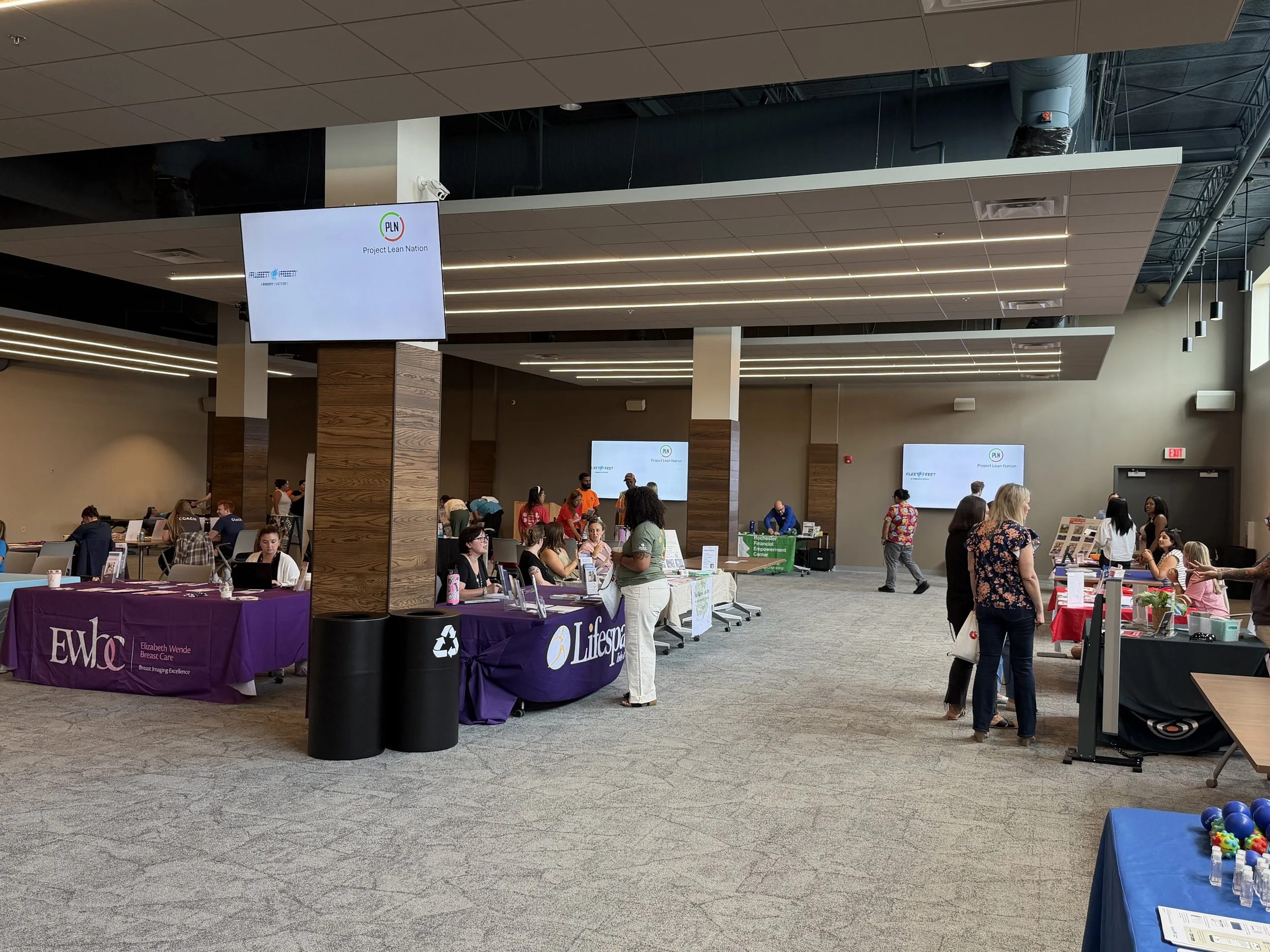
Inside Foodlink’s newly expanded Rochester facility, technology is helping create new possibilities for education, workforce development and community connection, powered by a partnership with local technology provider R-Options.
When we think about the technology that fuels organizations, we often focus on visible elements like computers and screens. Yet, much of what makes a modern workplace or community hub functional happens behind the scenes. That’s where R-Options has been making a difference for the past 15 years.
This Rochester-based company is an expert in the infrastructure that ties commercial spaces together. From structured cabling and fiber optics to access control systems and audio-visual technology, R-Options has left its mark on schools, churches, municipal facilities, and commercial buildings across the country. At Foodlink, their behind-the-scenes expertise is helping to drive a larger mission.
Expanding a Community Mission
Foodlink has been an integral part of the Rochester community for nearly five decades, but its role has evolved far beyond the traditional image of a food bank. While food distribution remains central to its mission, Foodlink also offers nutrition education, community initiatives, and workforce development programs, all while supporting a network of emergency food programs across a ten-county area.
As Foodlink’s activities have grown, so have the demands on its physical space. After acquiring its facility a few years ago, significant investments were made to enhance the building. These included practical upgrades like additional cooler capacity, a new roof, improved loading infrastructure, and more parking for its fleet. But owning the space also provided an opportunity to rethink how it could better support Foodlink's mission.
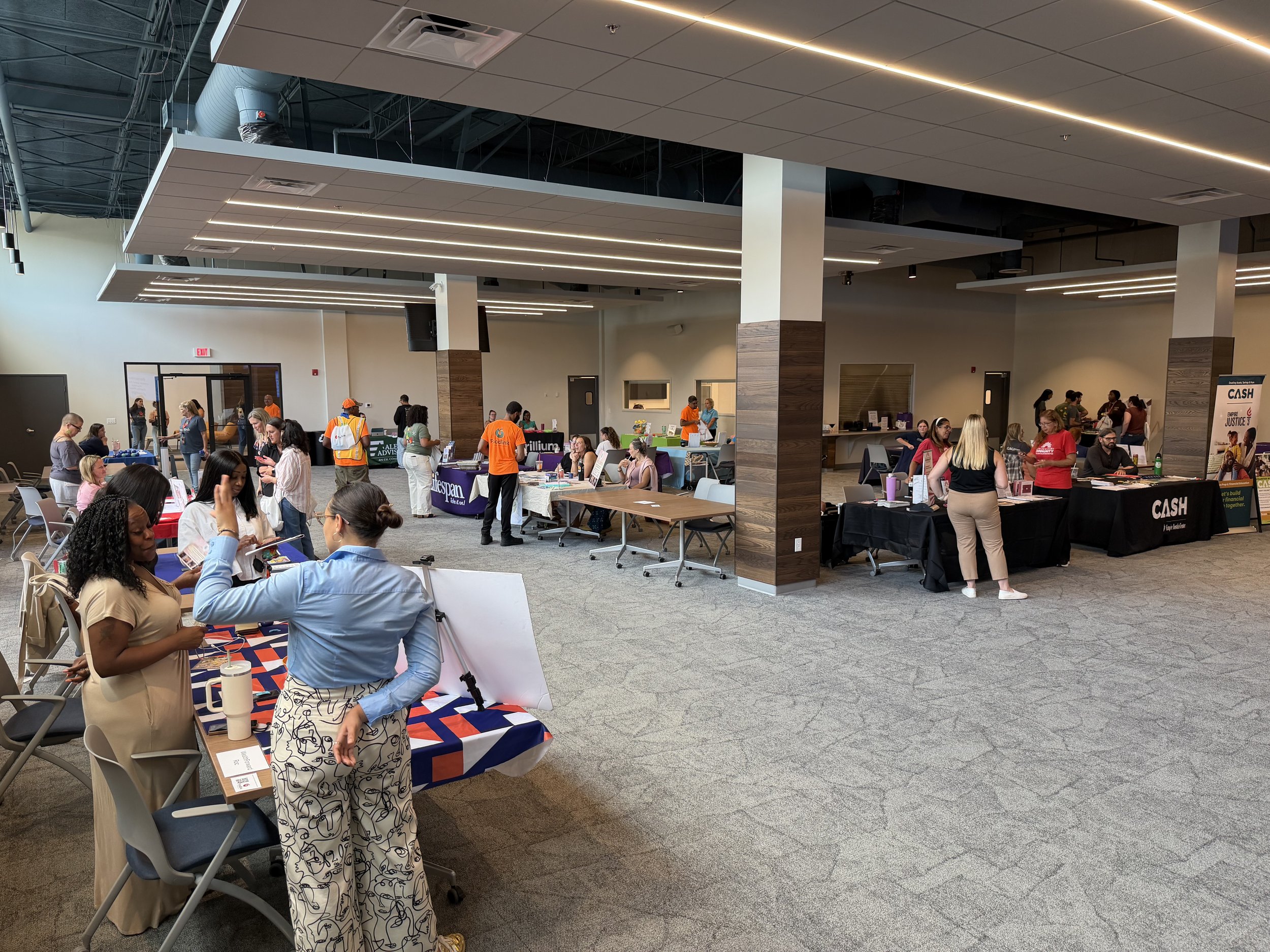
One of the key additions was a large gathering space now called the Commons. With around 130 employees, Foodlink previously lacked a room large enough to host its entire staff. The need for such a space extended beyond internal meetings. Foodlink collaborates with a wide network of food pantries and emergency shelters, often providing education and training to those partners. Their annual network conference needed to be held off-site.
The Commons now changes that dynamic. Foodlink can host staff, partners, and community members together for meetings, conferences, educational programs, and nutrition training. “We’re going to be able to do all of that here,” says Beth Hershel, VP/Chief Development Officer at Foodlink.
However, simply creating the room wasn’t enough. For Foodlink to maximize the space's potential, they needed technology that could adapt to various uses.
Designing User-Centric Technology
For R-Options, designing the right technology starts with understanding the people who will use it. Rather than beginning with a specific product or system, AV Solutions Account Executive Jeff Waasdorp starts by asking how clients envision the space working in practice. Who will be there? What will they need to accomplish? Could someone need to join remotely? Will presenters be moving around? And how might those needs change over time?
From that starting point, R-Options designs the technology around the experience. “We’re here to provide a solution for a need that they have,” said Waasdorp. At Foodlink, this approach led to the creation of three distinct, technology-enabled environments: the Commons, a classroom, and a dedicated teaching kitchen. Each space serves a unique purpose but shares a crucial design principle: sophisticated technology should remain user-friendly.
In the Commons, large displays are strategically placed so everyone can see presentations, regardless of where they sit. A distributed audio system and wireless microphones ensure everyone can hear, and Bluetooth connectivity allows for seamless device connections. As ideas for the room evolved, streaming capabilities were added, enabling meetings and educational programs to reach participants beyond the building.
Despite the advanced technology, using the room is straightforward. A user simply walks in, presses a large green button on the control panel, and the system comes to life without complicated remotes or technical support needed to start a presentation. That simplicity was intentional. For R-Options, effective technology isn’t just about capability; it’s about ensuring users can operate it comfortably.
Technology Supporting Workforce Development
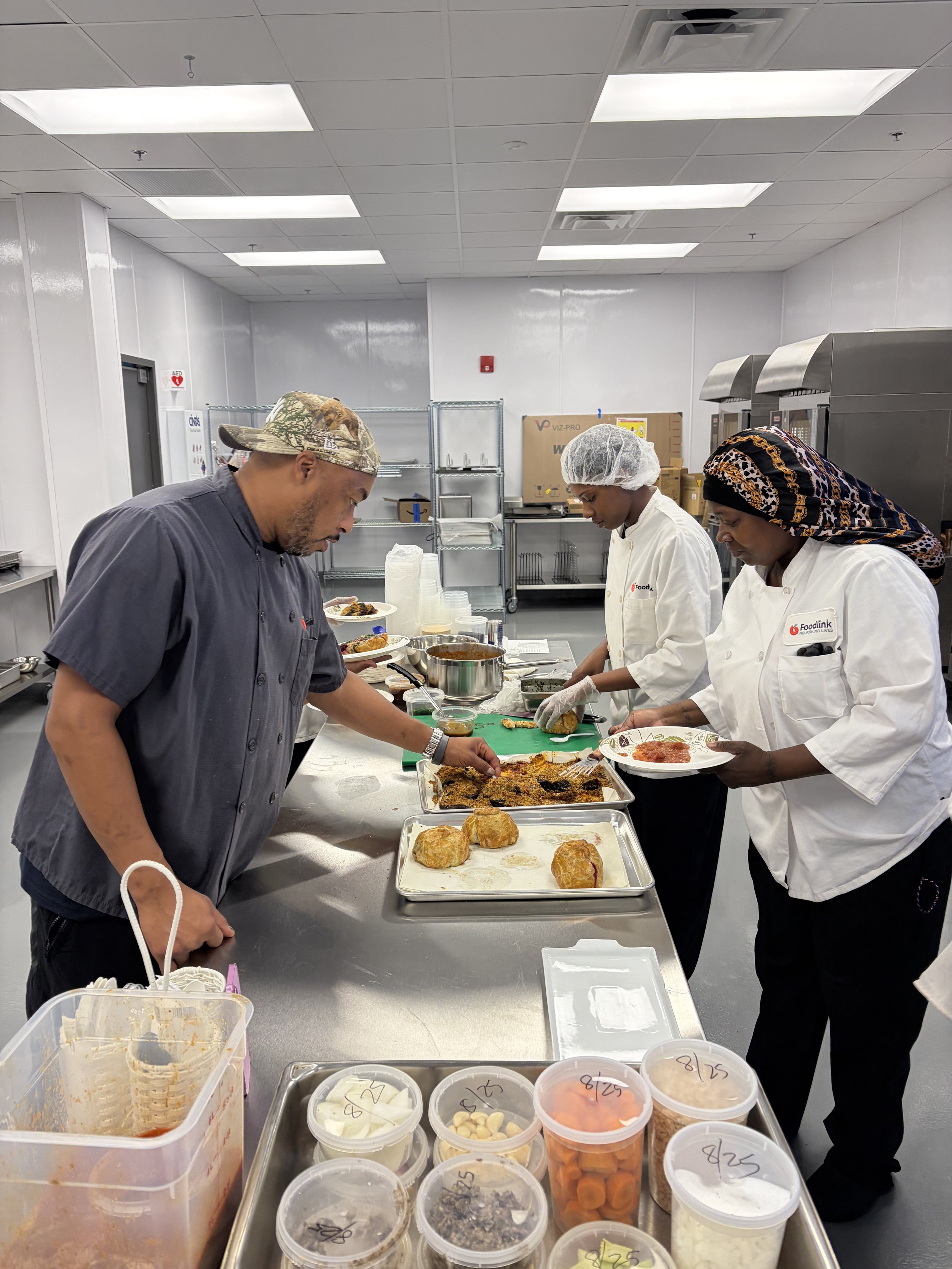
The most vivid example of technology enhancing Foodlink's broader mission is found in its new teaching kitchen and classroom. Foodlink’s Career Fellowship program aims to help participants develop culinary and life skills, ultimately leading to sustainable employment in the culinary industry. Previously, fellows had to share Foodlink's production kitchen, which was primarily designed for operational needs. The expansion now provides dedicated spaces for the program.
In the teaching kitchen, about 15 fellows can work at individual stations while following an instructor's demonstration. An overhead camera captures the chef's techniques and displays them on a large screen, ensuring every participant can clearly see the cooking process. The result is a hands-on experience reminiscent of a televised cooking show, but designed specifically for learning.
The adjacent classroom extends this educational experience beyond culinary skills. With 15 workstations, an interactive display, and conferencing capabilities, fellows can learn essential skills like financial literacy and project management. “Our career fellowship program is about empowering people to earn a living wage in the culinary industry,” said Mike Pitts, VP of Operations and Technology, from Foodlink. Here, technology is not just an end goal; it's infrastructure that supports opportunity.
More Than Just a Vendor
The new expansion represents another chapter in Foodlink’s long-standing relationship with R-Options. Over the years, R-Options has provided structured cabling, audio-visual systems, and other technological infrastructure across multiple Foodlink facilities, including its farm.
One benefit of that long-term partnership is consistency. R-Options has outfitted spaces ranging from small conference rooms to the expansive Commons. By maintaining similar interfaces across different areas, employees don’t have to relearn how to use systems each time they enter a new room.
“They’ve really become our audio-visual vendor of choice,” Pitts noted.
But the relationship goes beyond just equipment. Pitts values R-Options for its quality work, attention to detail, fair pricing, and prompt responsiveness. This commitment shows in small things, such as properly labeling cables, spotting issues during walkthroughs, and ensuring installations are both visually appealing and functionally sound.
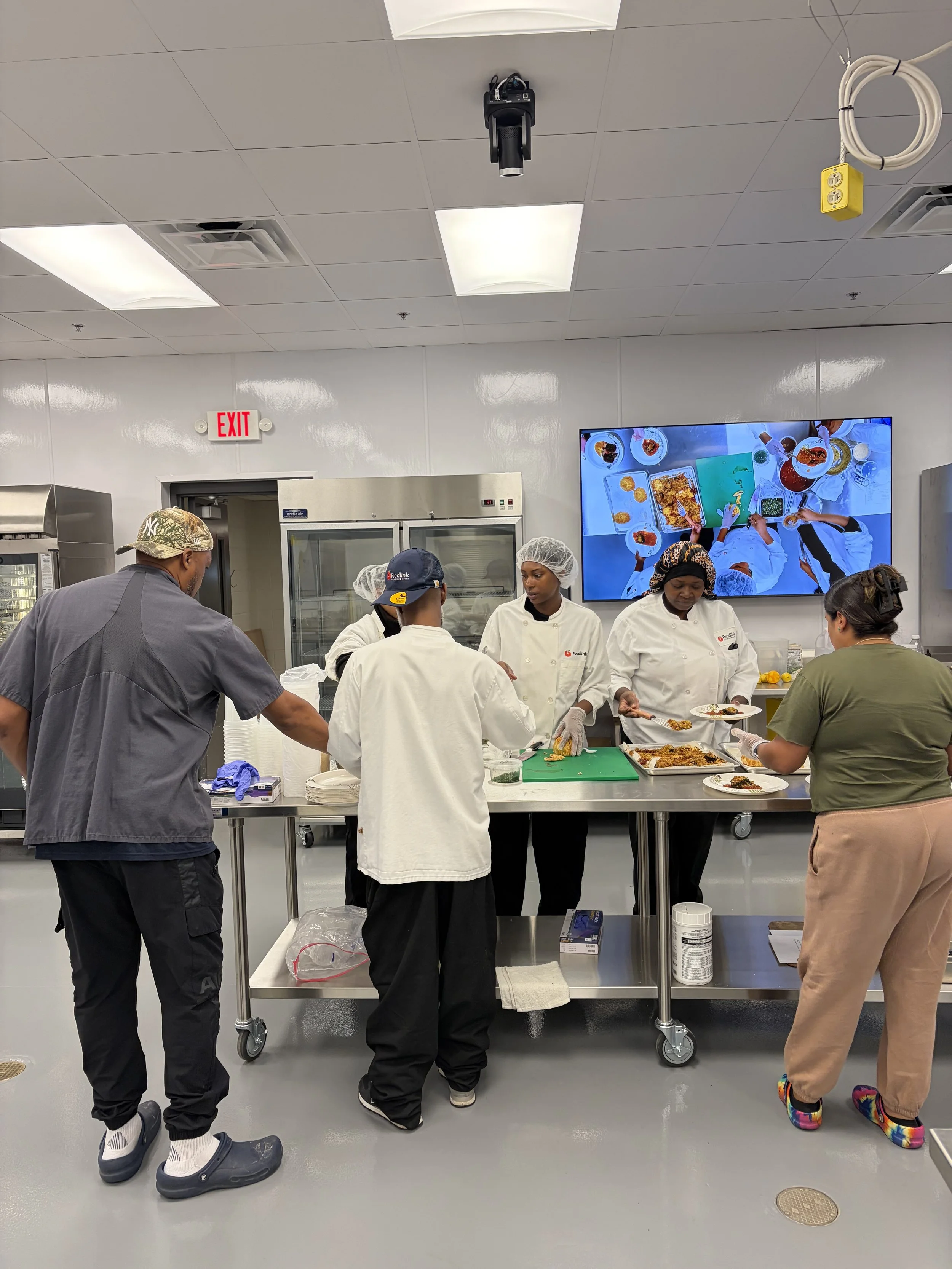
“The components and technology they provide have been top-notch,” Pitts said. “It just works.”
When challenges arise or needs change, the partnership doesn’t end with installation. Pitts appreciates having direct access to the team that knows the systems inside out. “I have their cell numbers. If there’s a problem, I can text them,” he shared. “They’re always here to help and follow up.”
Waasdorp emphasizes that this level of accessibility is what R-Options strives for in client relationships. When Foodlink reaches out, it’s the same team that responds, fostering direct, ongoing connections rather than passing clients around.
“The relationship is huge for us,” Waasdorp said.
Adapting to Future Needs
Such strong relationships are crucial, especially because spaces rarely stay static. The Commons is a perfect example. As the project progressed, Foodlink envisioned even more uses for the room. R-Options was quick to adapt, adding streaming capabilities and designing the system for future growth.
Waasdorp explained that flexibility is built into R-Options’ approach. Rather than crafting technology for a specific moment, they aim to create systems that can evolve with clients’ changing needs. This philosophy is particularly relevant for an organization like Foodlink, whose growth is directly linked to the community's varying demands.
And this growth reflects a pressing reality. Foodlink isn’t expanding simply for the sake of becoming a larger organization.
“Foodlink is not just growing for the sake of growing,” Hershel said. “There are more people to reach in our region.”
The new facility enhances Foodlink’s ability to respond to that need, not only by storing and distributing food, but also by educating, training, convening and creating pathways to economic opportunity.
Partnerships That Matter
The connection between Foodlink and R-Options extends beyond technology. Waasdorp expressed pride in supporting Foodlink due to its significant role in the Rochester community. R-Options actively participates in Foodlink events and seeks additional ways to engage with the organization.
For Hershel, such partnerships highlight the value of collaboration between local businesses and nonprofits. Vendors that initially came to Foodlink for projects often transition into supporters, participating in events or finding other ways to stay involved.
“Having partnerships with local businesses is beneficial for everyone involved,” Hershel said.
These relationships also provide a window into aspects of Foodlink’s work that often go unnoticed. Hershel said there is still a misconception that Foodlink is primarily focused on emergency food distribution, when its work extends into workforce development, nutrition education, farming and other community programs.
“It’s such a great opportunity to learn and see the breadth and depth of the work that we do,” Hershel said.
Behind the food flowing through Foodlink’s warehouse is an organization focused on nutrition education, culinary workforce development, and supporting hundreds of community partners—all while operating a farm. And much of this is made possible through technology that often goes unnoticed.
In many ways, that’s the goal. The best infrastructure quietly supports the mission. The screens light up. The microphone functions. An instructor begins teaching. Someone participates from home. A room filled with community partners gathers for training. A culinary fellow learns a new skill by watching a chef on a screen above their station.
Technology simply makes these moments possible.
For R-Options and Foodlink, this shared vision of technology’s potential has forged a partnership that extends well beyond the equipment in a room, one which has a positive impact on our community as a whole.
